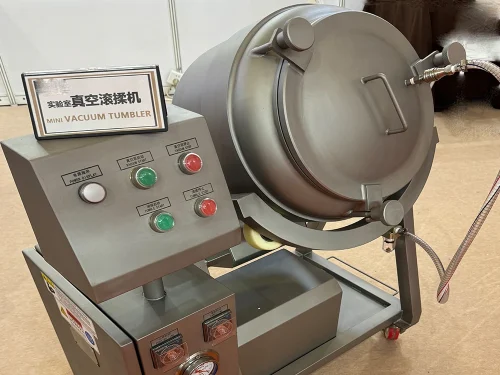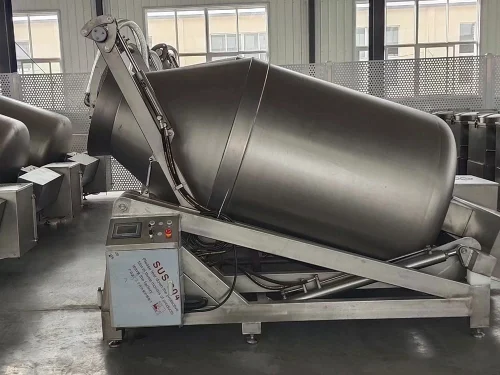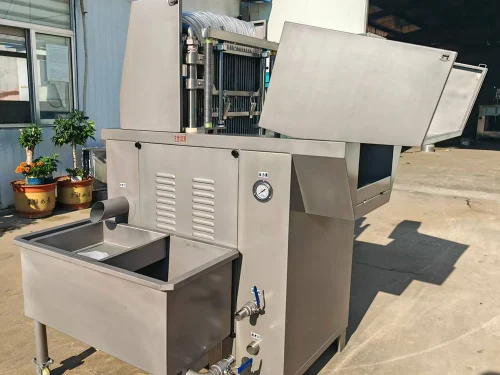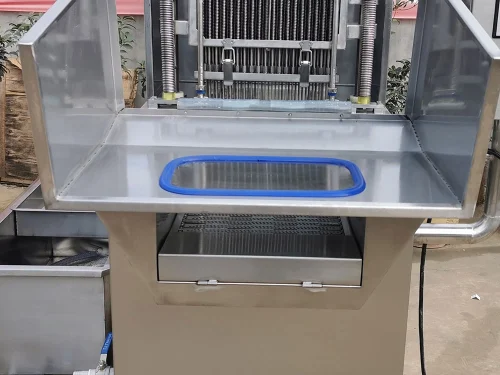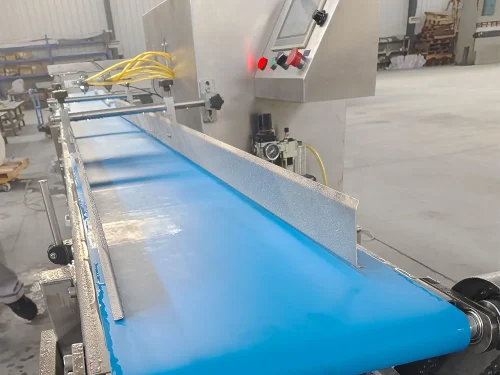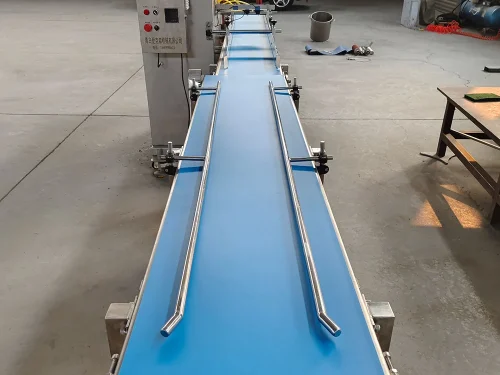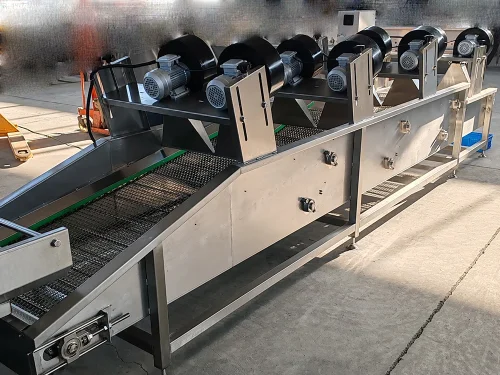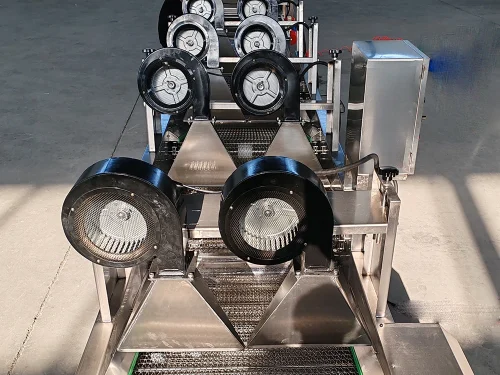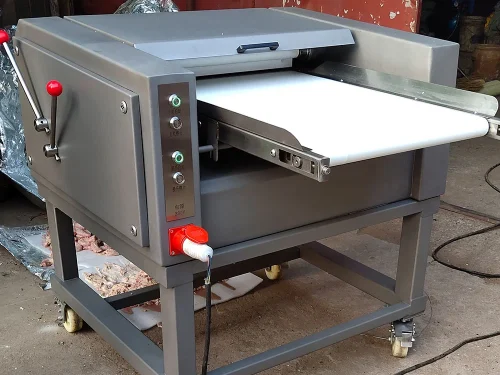
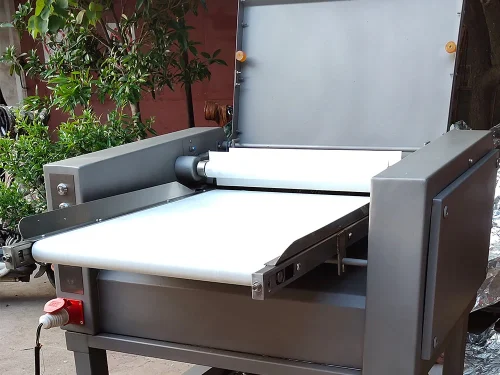
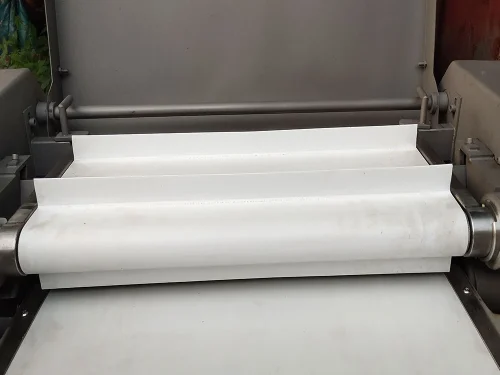
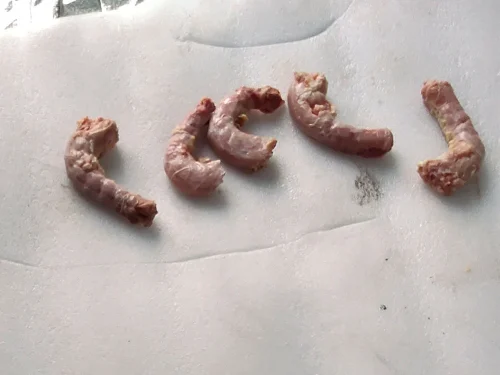
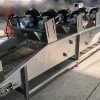
The chicken neck skinning machine is a specialized device used in poultry processing facilities to remove the skin from chicken necks efficiently. This machine ensures fast, hygienic, and consistent skin removal, making it a valuable tool in large-scale poultry operations.
- Efficiency
- Removes skin quickly compared to manual methods.
- Saves time and labor costs.
- Consistency
- Ensures uniform results.
- Reduces product wastage.
- Hygiene
- Meets food safety standards.
- Minimizes contamination risk during processing.
Main Parts of the Machine
- Frame
- Provides support and stability.
- Made of stainless steel to resist rust and maintain hygiene.
- Roller System
- Skin Removal Rollers: Gently grip and pull the skin off.
- Designed to avoid damaging the meat.
- Blade Assembly
- Sharp blades help cut or trim skin during the process.
- Adjustable to fit different sizes of chicken necks.
- Feeding System
- Guides chicken necks into the machine.
- Can be manual or automated.
- Motor and Drive Mechanism
- Powers the rollers and blades.
- Ensures smooth and continuous operation.
- Discharge Section
- Separates processed necks from removed skin.
- Sends products to the next stage of processing.
How It Works
- Loading
- Chicken necks are fed into the machine via the feeding system.
- Skin Removal
- Rollers grip the necks and pull the skin.
- Blades assist in cutting tough skin areas.
- Collection
- Skin is collected separately.
- Processed necks move to the discharge section.
- Repeat Process
- The machine operates continuously for high-volume processing.
Benefits
- Time-Saving: Processes hundreds of necks per hour.
- Cost-Effective: Reduces labor and increases production speed.
- High-Quality Output: Ensures neat and clean skin removal.
- Safe and Hygienic: Stainless steel design meets food industry standards.
Applications
- Poultry processing plants.
- Meat packaging facilities.
- Commercial kitchens handling bulk chicken preparation.
Maintenance Tips
- Clean the machine thoroughly after use.
- Inspect blades and rollers regularly.
- Lubricate moving parts as recommended.
- Replace worn-out components to maintain efficiency.