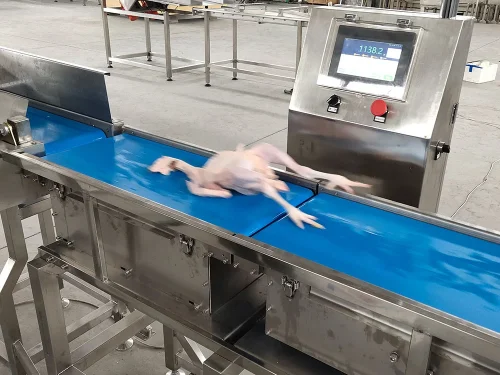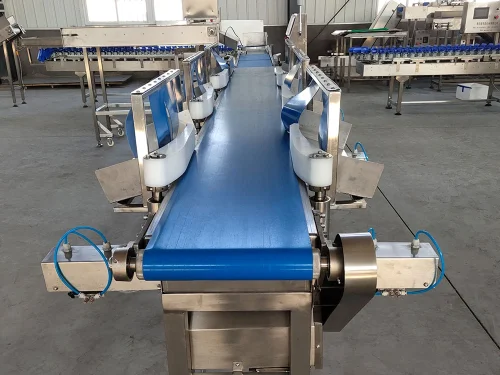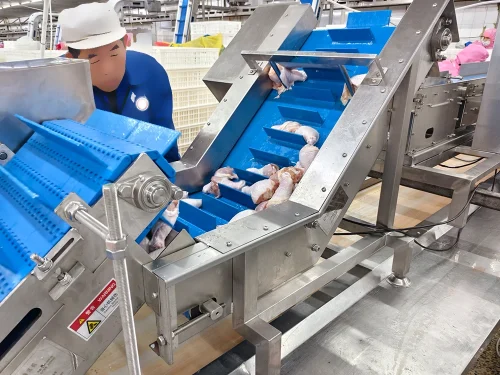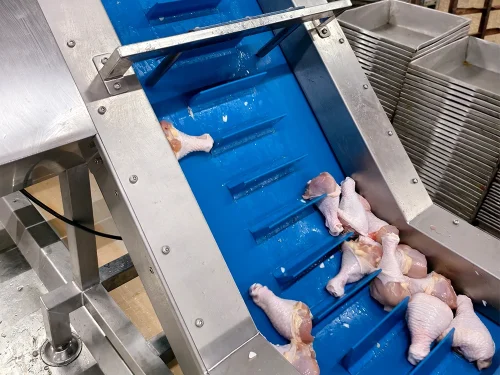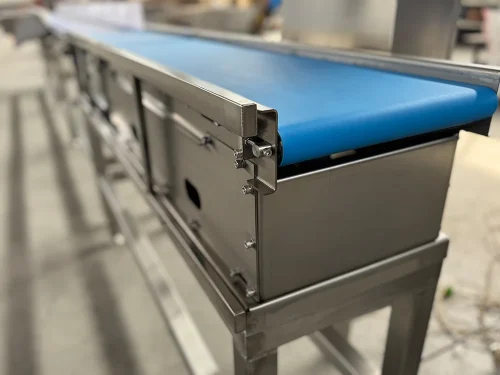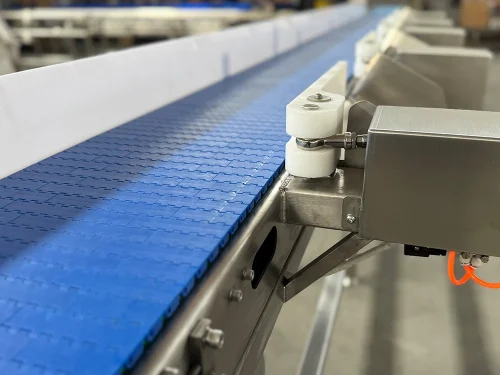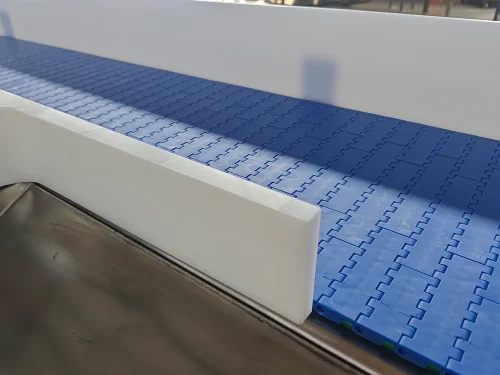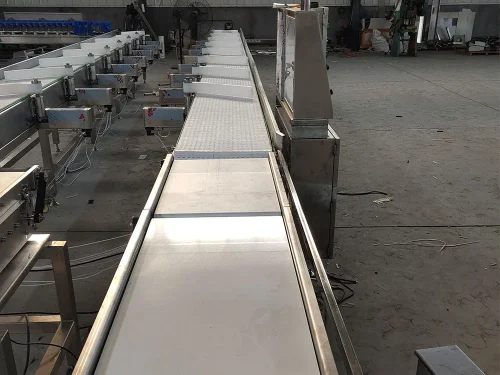
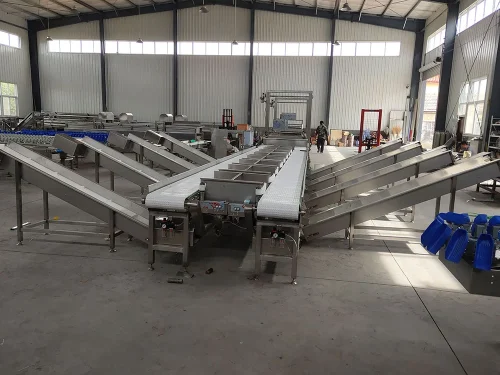
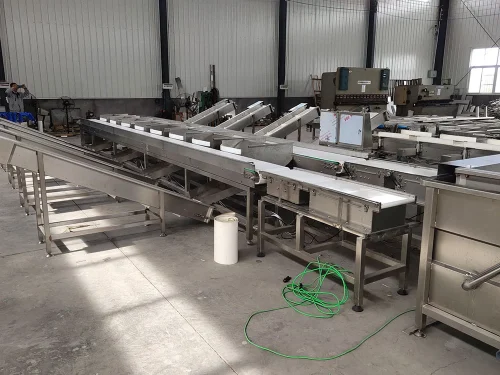
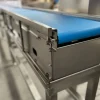
The fish sorting machine for belt is designed to sort fish based on specific criteria like size, weight, or species. It operates using conveyor belts to transport fish through automated sorting mechanisms, ensuring efficiency and accuracy in seafood processing plants.
Key Features
- Belt-Based Sorting
- Uses conveyor belts to transport fish to sorting sections.
- Ensures smooth and continuous operation.
- Automated Sorting Criteria
- Sorts fish by size, weight, or type using sensors, cameras, or mechanical gates.
- Hygienic Construction
- Made from stainless steel and food-grade materials to meet safety standards.
- High Capacity
- Handles large quantities of fish per hour.
Main Components
- Conveyor Belt System
- Transports fish through the sorting process.
- Adjustable speed to match processing needs.
- Weighing or Measuring Unit
- Uses sensors to determine the size or weight of each fish.
- Sorting Mechanism
- Gates or Diverting Arms: Direct fish to specific bins based on criteria.
- Air Jets (optional): Push fish into designated areas without physical contact.
- Sensors and Cameras
- Detect fish size, weight, or features for precise sorting.
- Advanced systems use AI or image processing for species identification.
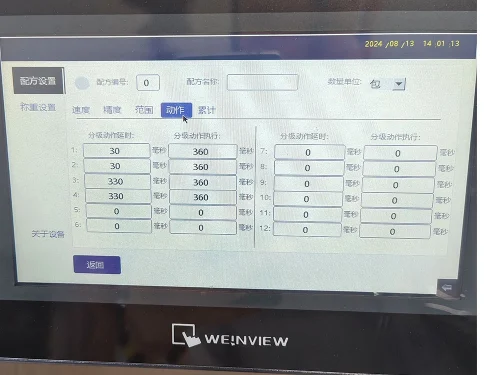
- Control System
- A PLC or microcontroller governs sorting logic and machine operations.
- Includes an HMI for operators to set sorting parameters.
- Collection Bins
- Separate bins or conveyors collect sorted fish categories.